Sometimes a date is more than just a square on the Calendar. You may be checking when an event happened, counting backward from a deadline, remembering an important conversation, or simply wondering where exactly ten weeks disappeared to. Time has a sneaky way of moving while we’re busy living it.
If Today is August 28, 2026, then 10 weeks ago was June 19, 2026. That means the Date 10 weeks prior is Friday, June 19, 2026. In simple terms, 10 weeks equals 70 days, so we can reach the same answer by counting back 70 days from August 28.
And yes, the answer can look surprisingly far away when you see it on a calendar. Ten weeks sounds small; seventy days sounds rather serious. Funny how numbers do that.
| Calculation | Result |
|---|---|
| Today | August 28, 2026 |
| 10 weeks | 70 days |
| 10 weeks ago | June 19, 2026 |
| Day | Friday |
| Total days | 70 days |
What Date Is 10 Weeks Ago From Today?

If you’re asking what date is 10 weeks ago from today, the answer is June 19, 2026, assuming Today is August 28, 2026.
The calculation is straightforward: 10 Weeks × 7 Days = 70 days. Subtracting 70 days from August 28, 2026, takes us back to June 19, 2026.
- Today: August 28, 2026
- 10 weeks ago: June 19, 2026
- Time duration: 10 weeks
- Equivalent: 70 days
- Day: Friday
- Past date: June 19, 2026
So, if someone asks what was the date 10 weeks ago, you can confidently tell them: Friday, June 19, 2026. No dramatic calendar staring required.
10 Weeks Ago From Today: The Quick Calculation
To understand 10 weeks ago from today, start with the current date and move backward by ten complete weeks. Since every week contains seven days, the calculation becomes 10 × 7 = 70.
For August 28, 2026, counting backward 70 days lands on June 19, 2026. This is a useful little trick because you don’t actually need a fancy tool every time.
- Start date: August 28, 2026
- Weeks to subtract: 10
- Days conversion: 10 × 7 = 70 days
- Date 10 weeks prior: June 19, 2026
- Result: Friday, June 19, 2026
This is essentially a basic Date calculation, but it becomes handy for school schedules, work records, appointments, project timelines, and those “wait, when did that happen?” moments.
How Do You Calculate 10 Weeks Before Today?
The easiest method is to convert the Weeks into Days and then subtract those days from the current date. One week is seven days, so ten weeks gives you 70 days.
If the current date is August 28, 2026, subtracting 70 days produces June 19, 2026. You can do the same calculation manually or use a date calculator or weeks calculator when you’re dealing with several dates.
The basic formula looks like this:
Today’s date − (10 × 7 days) = date 10 weeks ago
So:
August 28, 2026 − 70 days = June 19, 2026
Simple? Pretty much. The calendar just makes it look busier than it is.
10 Weeks Equals How Many Days?
10 weeks equals 70 days because one week contains seven days. This is the most important conversion when calculating a date ten weeks in the past.
You can use the same relationship for other calculations too. For example, 1 week is 7 days, 11 weeks is 77 days, and 12 weeks is 84 days.
- 1 week = 7 days
- 10 weeks = 70 days
- 11 weeks = 77 days
- 12 weeks = 84 days
- 13 weeks = 91 days
- 14 weeks = 98 days
Once you know this pattern, a weeks ago calculator becomes almost unnecessary for simple calculations. Almost—because sometimes letting a calculator do the boring bit is perfectly reasonable.
How Many Hours, Minutes, and Seconds Are in 10 Weeks?

A time duration can be expressed in several different units, and ten weeks gets surprisingly large once you start converting it.
Ten weeks contains 70 days. Each day has 24 Hours, each hour has 60 Minutes, and each minute has 60 Seconds.
Here is the complete conversion:
| Time Period | Equivalent |
|---|---|
| 10 weeks | 70 days |
| 10 weeks | 1,680 hours |
| 10 weeks | 100,800 minutes |
| 10 weeks | 6,048,000 seconds |
So 10 weeks in hours is 1,680 hours, while 10 weeks in minutes is 100,800 minutes. In seconds, it becomes 6,048,000 seconds.
Those numbers make ten weeks feel enormous. A week apparently has a very good sense of multiplication.
What Was the Date 10 Weeks Ago?
For anyone searching what date was 10 weeks ago, the answer depends on the date you are starting from. A relative date always needs a reference point.
Using August 28, 2026 as the starting point, the answer is June 19, 2026. This is why online calculators ask for a current or Start date before performing the calculation.
For example:
- Starting date: August 28, 2026
- Subtract: 10 weeks
- Total days: 70
- Resulting past date: June 19, 2026
That distinction matters because “ten weeks ago” isn’t a fixed date forever. Tomorrow, the answer changes. Time doesn’t wait politely for our spreadsheets.
What Day Was 10 Weeks Ago?
If you’re wondering what day was 10 weeks ago, counting backward ten complete weeks from Friday, August 28, 2026, takes you to Friday, June 19, 2026.
The weekday stays the same when you move backward by a whole number of weeks because every week contains exactly seven days. So Friday Friday after ten weeks.
This is useful when you remember an event by the day of the week but forgot its exact Date. Sometimes “it happened on a Friday” is the tiny clue that saves the whole search.
10 Weeks Prior to Today on a Calendar
A Calendar offers one of the clearest ways to understand a backward date calculation. Find August 28, 2026, and then move backward ten weekly intervals.
You eventually arrive at June 19, 2026. Looking at the calendar this way can be easier than thinking about 70 individual days, which sounds exhausting even before you start.
A calendar-based calculation is especially useful for:
- Project planning
- School schedules
- Pregnancy or milestone tracking
- Work deadlines
- Event planning
- Subscription periods
- Personal anniversaries
- Historical records
When you count backward 10 weeks, you’re simply moving ten seven-day blocks into the past.
Comparing 10 Weeks Ago With Nearby Dates
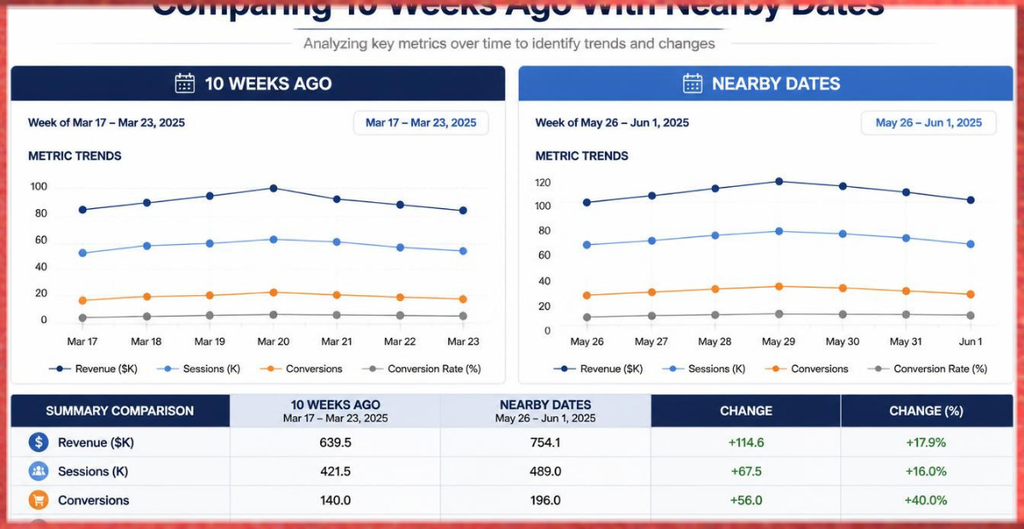
Sometimes you aren’t sure whether something happened ten, eleven, twelve, or thirteen weeks ago. Comparing nearby calculations can clear things up quickly.
From August 28, 2026:
| Period | Approximate Date |
|---|---|
| 10 weeks ago | June 19, 2026 |
| 11 weeks ago | June 12, 2026 |
| 12 weeks ago | June 5, 2026 |
| 13 weeks ago | May 29, 2026 |
| 14 weeks ago | May 22, 2026 |
This little comparison is useful when reviewing older messages, project milestones, appointments, or memories. And if you’re thinking about 11 weeks from today, 12 weeks from today, 13 weeks from today, or 14 weeks from today, remember those are future calculations, so they move forward rather than backward.
What Is a Relative Date?
A Relative date describes a date in relation to another date rather than giving a fixed calendar date. Phrases such as “today,” “yesterday,” “10 weeks ago,” and “three months from now” are all examples.
For instance, June 19, 2026 is a fixed calendar date. “Ten weeks ago” is relative because its actual date depends on what Today means at the moment you ask.
This is also why websites and apps sometimes display slightly different results if they’re using different time zones or reference dates. Date calculations can be simple, but computers still need to know which “today” we’re talking about.
Using a Date Calculator for 10 Weeks Ago
A date calculator can save time when you need to perform repeated calculations. Instead of manually subtracting weeks, you enter the starting date and choose how many weeks you want to move backward.
A typical weeks calculator works like this:
- Enter the Start date.
- Select backward or “ago.”
- Enter 10 Weeks.
- Run the Date calculation.
- Read the resulting Past date.
For a more detailed time duration calculator, you may also see the equivalent number of days, hours, minutes, and seconds.
This becomes particularly useful when calculating several intervals at once. Ten weeks is easy enough by hand, but nobody ever complained about having fewer tiny calculations to perform.
When Is 10 Weeks Ago Useful?
You might be surprised how often people need to know a date ten weeks in the past. It can be useful for practical, personal, and professional reasons.
Someone might calculate 10 weeks ago from today to check when a project began, when a purchase was made, how long ago an appointment occurred, or when a particular event took place.
Businesses can use date calculations to review reporting periods. Students might calculate deadlines. Families may use them for planning milestones. Even a person cleaning up an old calendar can suddenly find themselves asking, “What date was ten weeks ago?”
Dates are little anchors. Once you know one, the surrounding story often comes back.
How Days, Hours, Minutes, and Seconds Connect

Understanding Days, Hours, Minutes, and Seconds makes date calculations much easier to visualize. Ten weeks is 70 days, and those 70 days contain 1,680 hours.
The full conversion chain is:
10 weeks 70 days 1,680 hours 100,800 minutes 6,048,000 seconds
Therefore:
- 10 weeks in days: 70 days
- 10 weeks in hours: 1,680 hours
- 10 weeks in minutes: 100,800 minutes
- 10 weeks in seconds: 6,048,000 seconds
You may even see searches such as 1,680 hours ago, 100,800 minutes ago, or 6,048,000 seconds ago. They’re all describing the same ten-week duration, just wearing different numerical outfits.
Why the Starting Date Matters
Every backward calculation needs a starting point. If your Start date changes, your answer changes too. That’s the small but important secret behind every “weeks ago” question.
For this calculation, the reference date is August 28, 2026. Ten weeks before that date is June 19, 2026.
If someone instead asks the same question tomorrow, the result will be one day later. If they ask it five years ago, the answer will naturally be different again.
So always check the current date before trusting a relative-date result. “Ago” needs somewhere to begin.
A Simple Formula for Subtracting Weeks
If you need to subtract weeks from a date, the formula is wonderfully uncomplicated:
Number of weeks × 7 = number of days to subtract
For ten weeks:
10 × 7 = 70 days
Then subtract those 70 days from your starting date. This method works for many basic date problems, whether you’re trying to calculate weeks ago, calculate date from weeks, or find another past date.
For example, if you started with August 28, 2026:
August 28, 2026 − 70 days = June 19, 2026
There isn’t much mystery hiding underneath it. Just arithmetic and a calendar doing their quiet little teamwork.
What About 5 Years Ago?
A phrase like 5 years ago is different from ten weeks because years aren’t always the same number of days. Leap years can introduce an extra day, so converting years directly into weeks or days requires more care.
That’s why date calculators generally work with actual calendar dates rather than assuming every year has exactly 365 days.
For ten weeks, however, the calculation is clean: ten weeks is exactly 70 days. No leap-year drama enters the room.
Future Date vs. Past Date

A Future date is a date that comes after your reference date, while a Past date comes before it. “Ten weeks ago” clearly refers to the past.
By contrast, searches such as weeks from today usually indicate a future calculation. For example, “10 weeks from today” would mean moving forward ten weeks, while “10 weeks ago from today” means moving backward ten weeks.
Keeping these two directions separate prevents one of the most common date-calculation mistakes.
Think of it as a road: “ago” walks behind you, while “from today” can walk either direction depending on the wording.
Final Answer: What Date Is 10 Weeks Ago From Today?
So, let’s put everything into one clean answer.
If Today is August 28, 2026, then 10 weeks ago was Friday, June 19, 2026.
The calculation is:
August 28, 2026 − 10 weeks = June 19, 2026
And because 10 weeks equals 70 days, you can also say:
70 days ago from today = June 19, 2026.
| Calculation | Result |
|---|---|
| Today | August 28, 2026 |
| 10 weeks ago | June 19, 2026 |
| 10 weeks | 70 days |
| 10 weeks | 1,680 hours |
| 10 weeks | 100,800 minutes |
| 10 weeks | 6,048,000 seconds |
| Day of week | Friday |
Whether you’re checking an old event, planning a timeline, or just satisfying a stubborn little calendar question, the answer stays beautifully simple: June 19, 2026.
How to Make Date Calculations Easier

For occasional calculations, counting backward on a physical or digital calendar is perfectly fine. For repeated calculations, a weeks calculator, past date calculator, or relative date calculator can make things much faster.
When using any tool, check three things:
- Confirm the correct Today or Start date.
- Make sure you’re choosing “weeks ago” rather than “weeks from today.”
- Check whether the result displays the exact calendar date and weekday.
For detailed conversions, a time duration calculator can also translate weeks into Days, Hours, Minutes, and Seconds.The little bit of checking is worth it. A one-day mistake can turn a neat timeline into a rather confusing one.
Frequently Asked Question
10 weeks ago
10 weeks ago was Friday, June 19, 2026, based on today’s date, August 28, 2026.
10 weeks ago from today
10 weeks ago from today was June 19, 2026, which is exactly 70 days before today.
what was 10 weeks ago
10 weeks ago was Friday, June 19, 2026. You can calculate it by subtracting 10 weeks from August 28, 2026.
when was 10 weeks ago from today
10 weeks ago from today was Friday, June 19, 2026, or 70 days ago.
how long ago was 10 weeks ago
10 weeks ago was 70 days ago, equal to 1,680 hours, 100,800 minutes, or 6,048,000 seconds.
Read This Blog https://avenzob.com/20-weeks-from-today/
Conclusion
Ten weeks can feel like both a blink and a small lifetime, depending on what happened inside those seventy days. A project can start and finish, a season can change, people can meet, plans can disappear, and somehow the calendar keeps turning its pages without making much noise.
For the reference date of August 28, 2026, the answer to what date is 10 weeks ago from today is Friday, June 19, 2026. That’s 70 days ago, or 1,680 hours, 100,800 minutes, and 6,048,000 seconds.
So next time a date seems to have vanished into the fog, don’t worry. Give the calendar a starting point, count backward, and let the numbers do their quiet work. Sometimes finding an old date is a small thing but it can bring an entire memory back with it.