There is something oddly satisfying about getting a recipe measurement exactly right. A splash of milk becomes the perfect batter, a few fluid ounces (fl oz) turn into the right amount of sauce, and suddenly the kitchen feels less like guesswork and more like a little science experiment.
Whether you’re making breakfast for family, baking a birthday cake, or simply trying to understand a recipe from another country, knowing how to convert fl oz to cups can save you from that familiar “wait… how much is that?” moment.
A recipe may ask for ounces, while your measuring jug is marked in cups. Another recipe might use liquid ounces, milliliters (ml), or even liters
. It sounds complicated, but the basic fluid ounce to cup conversion is surprisingly simple when you’re working with US customary measurements. In most everyday American recipes, 1 cup = 8 fl oz, so you can quickly move between the two.
The interesting part is that not every cup around the world has exactly the same cup volume. The United States, United Kingdom, and Japan, for example, have used different definitions for cups and fluid measurements.
That tiny difference can matter when baking, especially when a recipe needs precision. So, let’s make the whole thing easy, without turning your kitchen into a mathematics classroom.
| Step | What to Do |
|---|---|
| 1 | Enter the number of fluid ounces (fl oz) you want to convert. |
| 2 | Use the fl oz to cups conversion option. |
| 3 | Divide the fluid ounces by 8 to find the number of cups. |
| 4 | For example, 8 fl oz = 1 cup and 16 fl oz = 2 cups. |
| 5 | You can also enter cups to convert them back into fluid ounces. |
What Is an fl oz to Cups Converter?

An fl oz to cups converter is a simple cooking converter that changes a quantity given in fluid ounces into an equivalent amount in cups. It is designed mainly for liquids, so it is useful for ingredients such as water, milk, cream, juice, oil, and sauces.
For the common US measurement system, the basic relationship is beautifully uncomplicated: 8 fluid ounces in one cup. If you know the number of fluid ounces, divide that number by 8 to find the number of cups.
For example, if a recipe asks for 12 fl oz, you calculate 12 ÷ 8 = 1.5 cups. Nothing dramatic happened, and your pancakes survived.
The important thing is remembering that fluid ounces measure volume, not weight. This means an oz to cup conversion can mean different things depending on whether “oz” refers to fluid ounces or ounces by weight. When you’re converting a liquid, look specifically for fl oz, fluid oz, or liquid oz.
How to Use an fl oz to Cups Converter
Using a converter is usually a matter of entering the fluid-ounce value and reading the cup result. But understanding the calculation behind the converter is useful because you can do it yourself anytime, even when your phone is somewhere under a pile of floury kitchen towels.
For the standard US measurement:
Cups = Fluid ounces ÷ 8
So, to understand how to convert fl oz to cups, simply take the amount in fluid ounces and divide it by 8.
A few examples make the idea much clearer:
- 1 fl oz to cups = 0.125 cup
- 2 fl oz to cups = 0.25 cup
- 2.5 fl oz to cups = 0.3125 cup
- 4 fl oz to cups = 0.5 cup
- 6 fl oz to cups = 0.75 cup
- 8 fl oz to cups = 1 cup
- 10 fl oz to cups = 1.25 cups
- 16 fl oz to cups = 2 cups
- 20 fl oz to cups = 2.5 cups
- 40 fl oz to cups = 5 cups
Once you spot the pattern, the calculation becomes almost automatic. You don’t really need to “think” about it anymore.
fl oz to Cups Conversion Chart
A fluid ounces conversion chart is handy when you’re working through a recipe and don’t want to calculate every quantity separately. Keep one nearby if you cook often, because nobody wants to divide numbers while holding a dripping measuring cup.
| Fluid Ounces (fl oz) | Cups |
|---|---|
| 1 fl oz | 0.125 cup |
| 2 fl oz | 0.25 cup |
| 2.5 fl oz | 0.3125 cup |
| 3 fl oz | 0.375 cup |
| 4 fl oz | 0.5 cup |
| 6 fl oz | 0.75 cup |
| 8 fl oz | 1 cup |
| 10 fl oz | 1.25 cups |
| 12 fl oz | 1.5 cups |
| 16 fl oz | 2 cups |
| 20 fl oz | 2.5 cups |
| 24 fl oz | 3 cups |
| 32 fl oz | 4 cups |
| 40 fl oz | 5 cups |
This chart follows the standard US relationship of 1 cup = 8 fl oz. For most everyday cooking measurements, that is the conversion you’ll want.
How Many fl oz in a Cup?

The answer most American recipes expect is 8 fl oz in one cup. So, if you’re wondering how many fluid ounces in a cup, remember the simple rule: one US customary cup contains 8 US fluid ounces.
That means:
1 cup = 8 fl oz
And working backwards:
1 fl oz = 0.125 cup
This relationship makes common kitchen conversions very quick. Half a cup is 4 fl oz, three-quarters of a cup is 6 fl oz, and two cups are 16 fl oz.
There is one little catch, though. A “cup” is not defined identically everywhere in the world. That’s where international recipes can become slightly sneaky.
Understanding Different Types of Cups
When someone says “one cup,” it sounds universal. It isn’t quite. Different countries and measurement systems use cups with different volumes, and that matters when precision is important.
US Legal Cup
A legal US cup is defined as 240 ml and is commonly associated with nutritional and food labeling standards in the United States.
US Customary Cup
The US customary cup is approximately 236 ml, based on the traditional US measurement system. For everyday cooking, it is normally treated as 8 US fluid ounces.
Metric Cup
A metric cup contains 250 ml. Many recipes using metric measurements use this cup, which is slightly larger than the US customary cup.
United Kingdom Cup
A United Kingdom cup may be approximately 284.13 ml when referring to the older imperial cup measurement. Modern UK recipes, however, often prefer grams and milliliters instead of cups.
Japanese Cup
A Japanese cup is commonly 200 ml. This is another reason an international recipe can produce a different result if you assume every cup means the same thing.
So when using a cup measurement, always consider which measurement system the recipe follows. A tiny difference may not matter in soup, but it can matter in a delicate cake.
Why Fluid Ounces Are Different From Ounces
This is probably the most important distinction to understand. Fluid ounces measure volume, while ounces can measure weight.If a recipe says 8 fl oz of milk, it is telling you the volume of the milk. If it says 8 oz of flour, it generally refers to the weight.
That means ounces to cups isn’t always a simple universal conversion. You cannot safely treat 8 ounces of flour as automatically equal to one cup just because 8 fluid ounces equals one cup of liquid.
For liquids, use fluid ounce measurement. For dry ingredients, a weight-based measurement is often more reliable.This distinction becomes especially useful when using a food measurement calculator or following recipes from different countries.
Common fl oz to Cups Examples

Sometimes you don’t want the formula. You just want the answer. Fair enough.
How Much Is 6 oz to a Cup?
6 fl oz = 0.75 cup, or 3/4 cup. This is a very common conversion for milk, juice, cream, and other liquids.
1 fl oz to Cups
1 fl oz = 0.125 cup, which is also 1/8 cup.
2 fl oz to Cups
2 fl oz = 0.25 cup, or 1/4 cup.
4 fl oz to Cups
4 fl oz = 0.5 cup, or 1/2 cup.
6 fl oz to Cups
6 fl oz = 0.75 cup, or 3/4 cup.
8 fl oz to Cups
8 fl oz = 1 cup. This is the basic conversion most people memorize first.
10 fl oz to Cups
10 fl oz = 1.25 cups, or 1 1/4 cups.
16 fl oz to Cups
16 fl oz = 2 cups.
20 fl oz to Cups
20 fl oz = 2.5 cups, or 2 1/2 cups.
How to Convert Cups to fl oz
The reverse calculation is just as easy. If you’re learning how to convert cups to fl oz, multiply the number of cups by 8.
Fluid ounces = Cups × 8
So:
- 0.5 cup to fl oz = 4 fl oz
- 1 cup = 8 fl oz
- 2 cups = 16 fl oz
- 2.5 cups to fl oz = 20 fl oz
- 3 cups to fl oz = 24 fl oz
The shortcut is simple: multiply cups by 8.
If you have 3 cups of milk, for example, 3 × 8 = 24 fl oz. That’s the entire conversion, no kitchen wizardry required.
Cups to Fluid Ounces Conversion Chart
A cups conversion chart can also work in the opposite direction. This is particularly useful when an American recipe gives cups but your measuring container uses fluid ounces.
| Cups | Fluid Ounces |
| 1/4 cup | 2 fl oz |
| 1/2 cup | 4 fl oz |
| 3/4 cup | 6 fl oz |
| 1 cup | 8 fl oz |
| 1.25 cups | 10 fl oz |
| 1.5 cups | 12 fl oz |
| 2 cups | 16 fl oz |
| 2.5 cups | 20 fl oz |
| 3 cups | 24 fl oz |
| 4 cups | 32 fl oz |
| 5 cups | 40 fl oz |
This is a useful cooking measurement conversion reference for everyday kitchen work, especially when switching between measuring cups and liquid measuring jugs.
Using the Converter for Recipes
Recipes are where a good converter really earns its keep. Imagine you’re making a pancake recipe that calls for 12 fl oz of milk, but your measuring cup only shows cups.
Divide 12 by 8.
The result is 1.5 cups of milk.
Now imagine another recipe needs 6 fl oz of water. That’s 3/4 cup. Easy enough.
For pancakes, soups, sauces, smoothies, and drinks, these liquid conversions can make recipe preparation much smoother. A recipe doesn’t suddenly become foreign just because its measurements are written in a different format.
When scaling recipes, however, pay attention to the original measurement system. Mixing a metric cup measurement with a US cup without checking can create small but cumulative differences.
Cooking Measurements Beyond Cups
A kitchen rarely stops at cups and fluid ounces. You may also encounter milliliters (ml), liters, pints, and other units.
For example, 1 liter equals 1,000 ml. A US liquid pint is commonly 16 US fluid ounces, while an Imperial pint is 20 Imperial fluid ounces and equals approximately 568.26 ml.
That difference between US and Imperial measurements is one of those little details that can quietly cause trouble. A recipe from the United Kingdom isn’t always using the same volume system as one from the United States.
A useful liquid measurement conversion tool can help when recipes mix cups, milliliters, liters, and fluid ounces. It is especially useful when cooking from international food blogs.
fl oz, Cups, and Coffee Cup Measurements
A coffee cup is not necessarily the same as a standard measuring cup. This catches people out more often than you’d expect.
A traditional coffee serving may be much smaller than 8 fl oz, and a “cup” printed on a coffee machine can represent a serving size rather than a standard kitchen cup. A common reference for a coffee cup is around 118 ml, though actual serving sizes vary.
So if a coffee maker says it makes ten cups, don’t immediately assume it produces ten standard 8-fl-oz cups. Coffee-machine “cups” are their own little world.
Legal Cup vs Customary Cup

The difference between a legal cup and a customary cup can seem tiny, but precision cooking sometimes lives in tiny places.
A legal US cup is 240 ml, while a US customary cup is approximately 236 ml. For casual cooking, that four-milliliter difference is usually insignificant.
For baking, scientific work, nutrition calculations, or food labeling, however, the exact definition may matter. This is why professional recipes sometimes provide both volume and metric measurements.
If a recipe gives grams or milliliters alongside cups, that’s not unnecessary clutter. It’s often there to make the recipe easier to reproduce accurately.
When an fl oz to Cups Converter Is Most Useful
A conversion calculator becomes especially helpful in several situations:
- Following recipes from another country
- Scaling recipes for a larger family
- Adjusting serving sizes
- Converting drink recipes
- Measuring milk, water, oil, or juice
- Comparing package quantities
- Understanding food labeling
- Switching between measuring cups and liquid jugs
- Checking recipe measurement conversion
- Working with international cooking instructions
It’s one of those tools that looks almost too simple to need, until you’re standing in the kitchen with 20 fl oz in front of you and a recipe asking for cups.
How to Avoid Common Conversion Mistakes
The first mistake is confusing fluid ounces with ounces by weight. Keep them mentally separate.The second mistake is assuming every country uses exactly the same cup volume. The US, UK, Japan, and metric systems don’t always agree.
Another common problem is rounding too early. If your calculation produces 0.3125 cup, don’t randomly turn it into 0.3 cup if the recipe requires precision. You may be better off using another measuring unit.
Also, check whether your recipe is using US cup measurement, metric cup measurement, or another standard. It takes only a few seconds, and those seconds can save a batch of cupcakes from becoming experimental architecture.
When You Should Use Milliliters Instead
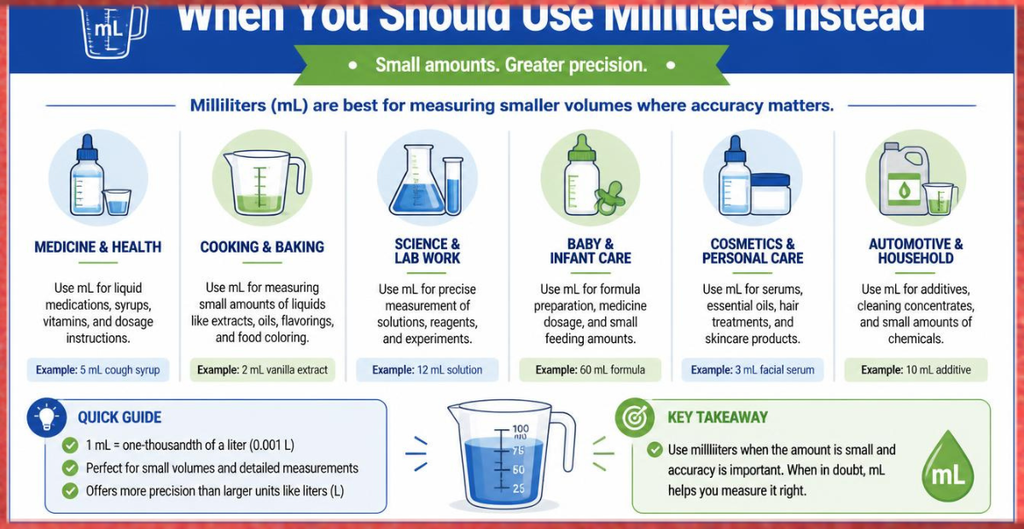
Sometimes milliliters are simply easier.If you need 375 ml of milk, measuring 375 ml directly is often more precise than converting it into cups and then trying to find an awkward fraction. This is especially true for baking.
A cup volume in ml depends on the measurement system, so metric recipes often benefit from staying metric. Likewise, recipes written in liters are best handled with a jug marked in liters or milliliters.
The general rule is simple: if the recipe gives precise metric measurements, don’t convert them just for the fun of it. Keep the original system when possible.
fl oz to Cups for Baking and Pancakes
Baking is where measurement accuracy starts becoming a serious little business. A pancake recipe may tolerate a slightly different amount of milk, but cakes can be less forgiving.
Suppose your pancake recipe asks for 16 fl oz of milk. Using the US conversion:
16 fl oz ÷ 8 = 2 cups
If it calls for 6 fl oz:
6 fl oz ÷ 8 = 0.75 cup
That’s 3/4 cup, a measurement you’ll probably recognize immediately.
For a cake pan converter, the idea is different because pan size involves dimensions and volume rather than simply liquid conversion. Still, both tools share the same goal: making kitchen measurements easier to understand instead of leaving cooks to guess.
Quick Formula to Remember
If you forget everything else, remember these two formulas:
fl oz to cups:
Cups = fl oz ÷ 8
cups to fl oz:
fl oz = cups × 8
So if you need to divide fluid ounces by 8, you’re converting US fluid ounces into cups.If you need to multiply cups by 8, you’re converting US cups into fluid ounces.That’s really the heart of the converter.
Frequently Asked Question
oz to cups
For liquid measurements, divide fluid ounces by 8 to convert oz to cups. For example, 8 fl oz equals 1 cup.
ounces to cups
To convert ounces to cups, divide the number of fluid ounces by 8. For example, 16 fl oz equals 2 cups.
oz to cup
For US liquid measurements, 1 fl oz equals 0.125 cup, so 4 fl oz equals 1/2 cup.
oz in cup
There are 8 fluid ounces in 1 US customary cup. This is the standard conversion used in many recipes.
how many oz are in a cup
There are 8 fluid ounces in one US cup. However, cup sizes can vary slightly depending on the measurement system.
Read this blog https://avenzob.com/9-months-from-today-instantly-find-the-exact-future-date/
Final Thoughts on Using an fl oz to Cups Converter
Learning how to use fl oz to cups converter is much easier than it first sounds. For standard US measurements, the central rule is simply 1 cup = 8 fl oz. From there, you can divide fluid ounces by 8 to get cups, or multiply cups by 8 to get fluid ounces.
The bigger lesson is to pay attention to the measurement system. A US customary cup, legal cup, metric cup, UK cup, and Japanese cup can represent different volumes.
And because recipes are often shared across borders now, knowing which system you’re using can make a surprisingly big difference.
Whether you’re measuring milk for pancakes, water for soup, oil for a cake, or a drink for a family gathering, a kitchen measurement converter can take the uncertainty out of the process. Keep the basic formula nearby, use a conversion chart when needed, and don’t confuse liquid volume with weight.
Good cooking isn’t always about complicated techniques. Sometimes it’s just knowing that 6 fl oz is 3/4 cup, 16 fl oz is 2 cups, and 20 fl oz is 2.5 cups. Tiny facts, perhaps, but tiny facts have a habit of saving dinner.
And the next time a recipe throws an unfamiliar measurement at you, don’t panic. Grab your converter, check the measurement system, do the little calculation, and carry on. The batter doesn’t know you were confused for thirty seconds anyway.